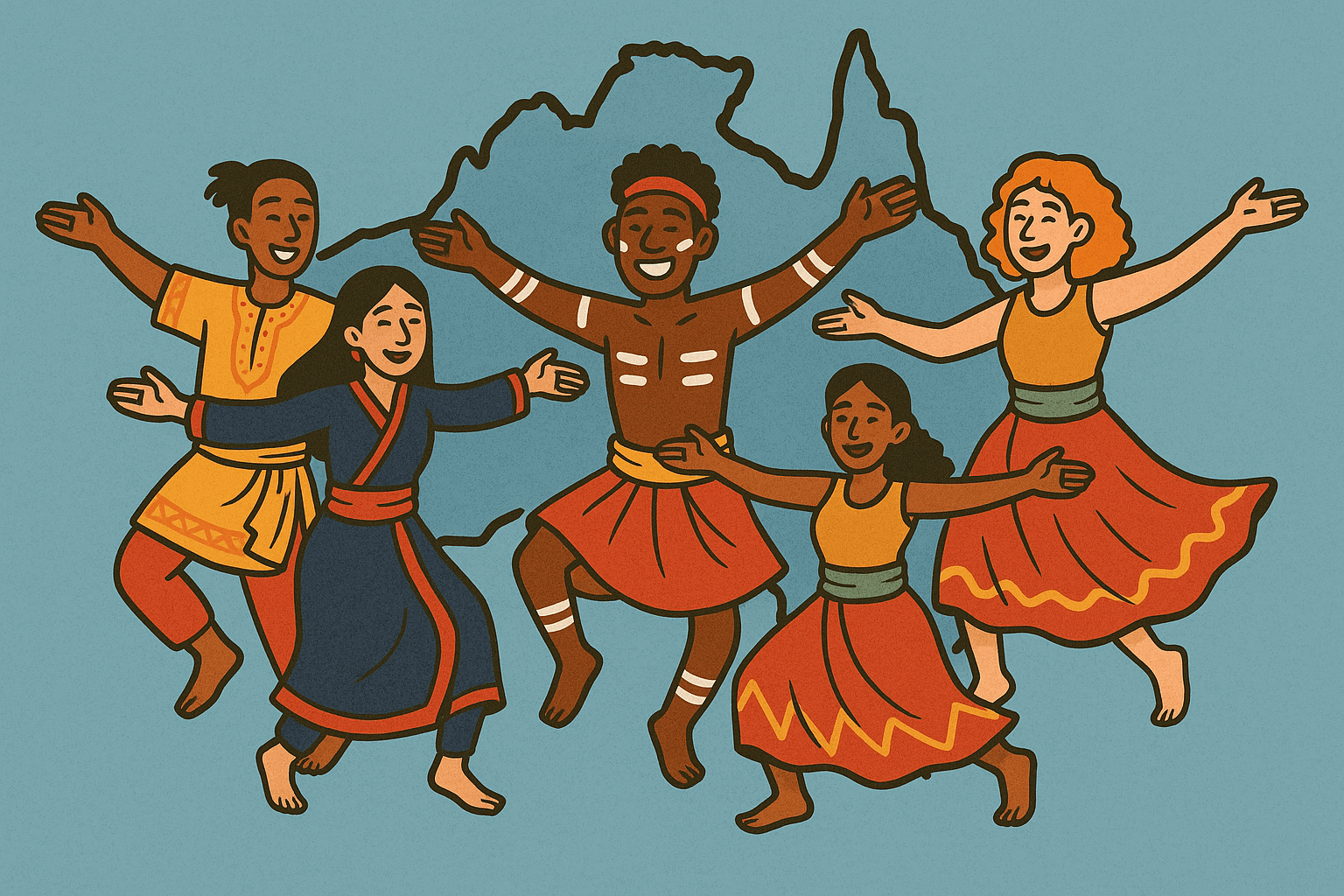
Culture and artistic practices aren’t luxuries or afterthoughts—they are foundational to how we understand the world and imagine what’s possible. This blog explores why culture and creativity should be at the heart of future-thinking, policymaking, and innovation.
Art and cultural practices are not just forms of expression. They are essential ways of knowing, creating, and connecting.
Dr. Alexandra Block
The Value of Cultural Practice
When we talk about shaping the future—through innovation, policy, or systems design—we often default to data, economics, and technology. But something vital is missing from this picture: culture and art.
Art and cultural practices are not just forms of expression. They are essential ways of knowing, creating, and connecting. They help us understand ourselves, build empathy, challenge assumptions, and imagine different futures. In moments of crisis and change, it is often artists, storytellers, and cultural leaders who guide society through complexity—not by offering answers, but by helping us ask better questions.
Why Culture Matters in Future Design
Culture shapes how we see the world—and how we shape it in return. It offers the symbols, narratives, rituals, and values through which people make sense of life.
Bringing cultural practice into policy and planning helps to:
- Build empathy and understanding across differences.
- Foster innovation by allowing space for experimentation, play, and reflection.
- Preserve and evolve identity through storytelling and heritage.
- Challenge dominant systems and amplify underrepresented voices.
- Make space for imagination—critical for addressing complex challenges like climate change, migration, or reconciliation.
In short, culture provides the emotional and symbolic infrastructure that holds communities together and enables transformation.
Art as Method, Not Just Output
Art is not only a product—it’s also a process. Artistic practices such as storytelling, design, theatre, music, and visual arts help people think through complexity, surface new ideas, and explore alternate futures.
Some practical examples include:
- Participatory theatre to explore community tensions and co-create solutions.
- Public art installations that activate public space and provoke dialogue.
- Cultural co-design methods where artists work with governments and communities to reimagine services or policies.
- Indigenous art practices that embed knowledge systems, land connection, and cultural continuity into governance processes.
When embedded early in decision-making, these practices lead to more grounded, inclusive, and innovative outcomes.
Recognising and Resourcing Cultural Leadership
Too often, cultural practitioners are brought in late—to “decorate” a finished plan or deliver a performance at a launch event. But genuine cultural engagement must be resourced, recognised, and embedded from the beginning.
This means:
- Funding artists and cultural workers as central contributors to systems change.
- Building long-term partnerships between government, communities, and the cultural sector.
- Protecting cultural heritage while allowing space for cultural evolution.
Valuing cultural labour not as a “soft” add-on, but as critical civic infrastructure.
Culture is not an Add-On – It’s The Foundation
In uncertain times, culture grounds us. In transformative times, art guides us forward. If we want to build futures that are inclusive, creative, and just, we must centre culture—not as decoration, but as a driver.
Culture shapes the way we live—and it should shape the way we lead.